
Detailed case studies from successful NIPhD projects written by Serina Bird – Check back regularly for new articles on Australia’s groundbreaking research.
Renox developing world-leading solutions for energy storage and systems
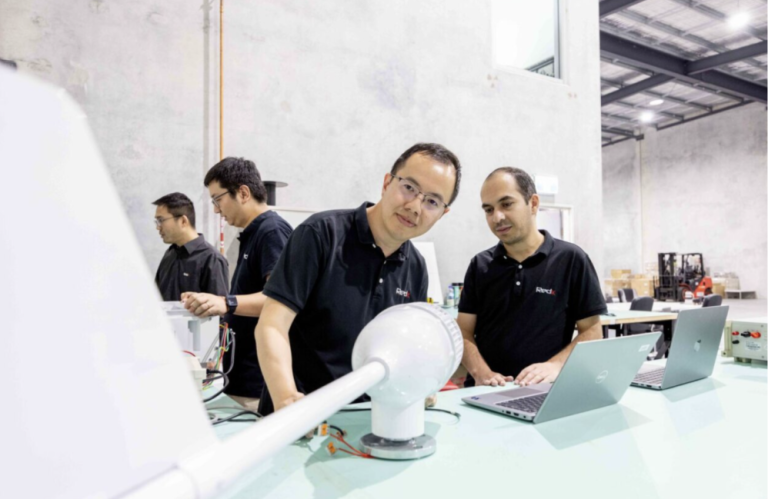
Renox developing world-leading solutions for energy storage and systems
In short: Griffith University is working with cutting edge renewable energy startup Renox to create world-leading expertise in energy storage and grid stability
- Three PhD students employed by Renox commenced their PhDs with Griffith University in July 2024 as part of the National Industry PhD (NIPhD) Program with a fourth commencing in September 2025.
- What’s next: Renox is working with Griffith University to develop cyber-safe, AI enabled technologies to optimise household renewably sourced electricity release back into the grid.
Powering up Australia’s renewable energy capability
Gold Coast-based startup Renox (formerly RedX) aspires to be a world-leader in encouraging households and businesses to utilise renewable energy. It is known for its patented inverter technology that creates a battery storage system for households. If you live in Southeast Queensland, you may even have seen Renox spruiking its technology services at a shopping mall. And that’s because Renox wants to make it easy for every family to achieve net zero by using renewable energy – without drawing any power from the grid. And it’s now working towards options that will make it easier for households to make money by selling energy back into the grid at best most opportune time.
But it’s not just households: Renox has also developed high-end container-sized batteries for commercial use. Its battery and solar systems are being deployed in the Reflections Holiday Park in Shaws Bay, New South Wales, helping reduce energy consumption – and energy bills. It is also working on a government project to provide a First Nations community in a remote location with a battery solution.
Leading the charge on University-Industry collaboration
Griffith University has an active focus on collaborating with industry, which positioned it well to be a partner for the NIPhD Program. ‘We are really encouraging industry alignment for our PhDs,’ said former HDR Partnerships Coordinator at Griffith University, Brooke Cotton. ‘We have a Griffith Industry PhD scholarship scheme, and we’ve been aligning ourselves with industry, encouraging our academics to go out and partner with industry to be more innovative in our research. This project with Renox really encapsulates what we are trying to achieve.’
Connecting up Griffith and Renox
When she learnt of the NIPhD Program, Associate Professor Hui Tian, Discipline Head of Computer Science at Griffith University was interested. She reached out to Renox founder Jonathan Chen and proposed a partnership. ‘Griffith is strong in AI, data science and cyber security areas,’ she said. ‘We have some common interests. And they have some beautiful data we can use,’ she said.
Renox’s Chief Scientist Dr Lee Weng has moved from the US to the Gold Coast to help drive research and development. Dr Lee’s career had previously been in the medical device industry, where he is well known for pioneering development of 4D ultrasounds imaging, which is often used to take photos of babies in utero. Dr Lee encourages and supports further education for its staff and collaboration with academia, including study towards a PhD under the NIPhD Program. ‘My objective is to help my colleagues work together with Professor Tian and others at Griffith University to select a project that is closely related to what we do, or what we want to do,’ said Dr Weng. ‘We are in the renewable energy industry. The challenge we’re facing is critical. We see how the electricity market in Australia is struggling through the day. Everyone is working hard together to try to create something that is beneficial to society.’
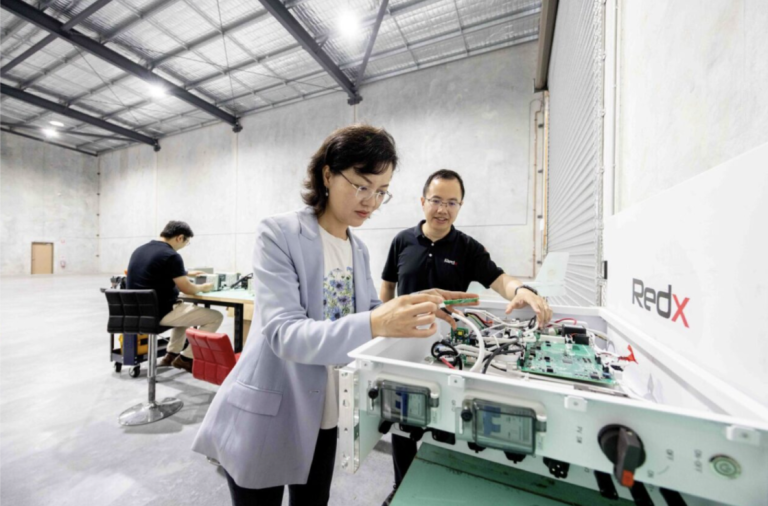
The Research
Renox’s research under the NIPhD Program is focused on 2 areas:
- AI in Energy Management: working on advanced load and consumption prediction models that will make energy use more efficient and cost-effective.
- Cybersecurity in Distributed Energy Resources (DER): developing robust and resilient solutions to protect smart grids from cyber threats, to ensure a secure energy future.
In addition to their patented hardware, Renox is also aiming to develop innovative software solutions. The aim is to help customers better predict energy pricing so they can discharge battery energy into the grid at the ideal time. The spot price for energy goes up and down, and during areas of peak demand renewable energy producers can earn more than at other times. To make it easier for customers to predict the best time to discharge their renewable energy, Renox is harnessing cutting edge AI and cyber security. This involves developing innovative software solutions, with support from the NIPhD Program.
Meet the Students, the Powerhouse of the Research
In July 2024, Renox entered into a NIPhD Program arrangement with Griffith University for 3 of its staff to commence PhDs with Griffith University with a fourth commencing in September 2025. All students are working on complex digital solutions that will help with managing and monitoring energy. Furthermore each student is working on a single element of the broader project, the findings of which will combine to create the bigger picture of where this technology will go.
- Chois Cai works as Director of Software Engineering at Renox. His background is as a cyber security professional. His PhD is in the early of cyber security. ‘Energy security is crucial to both consumers and the nation,’ he said. ‘We need secure, distributed energy resources – not just for the battery system, but also the solar inverter.’ Through working with Professor Tian, he’s already obtained some useful insights that have led to adjusting his research proposal.
- Xingyun (Adam) Wang has a background in IT and engineering. His PhD project will examine AI support systems, with a particular focus on ensuring safe and secure onsite installation.
- Eimar Ibrahimov, originally from Azerbaijan, is developing models to help predict household and commercial loads so customers can discharge energy from the battery at the ideal time using AI technology
- Michael Francis Regi Jeyakuma who is a PhD candidate supported with a Research Training Program stipend, rather than an employee of Renox, is conducting a project investigating cybersecurity methods for users of Distributed Energy Storage Systems.
While Professor Tian has the overarching responsibility for coordinating the Renox and Griffith University collaboration and oversees the projects, other academic supervisors at Griffith are involved, to supervise the different projects according to their expertise. These include Professor Alan Wee-Chung Liew and Dr Qinyi Li.
How the NIPhD Program Supports the Collaboration
The NIPhD Program has been the cornerstone of Renox and Griffith University’s partnership, creating a structured pathway for innovation that benefits both industry and academia.
Professor Tian, who oversees the collaboration, emphasized the program’s role in bridging research and application stated ‘The NIPhD Program provides the framework and support we need to align academic research with real-world industry challenges. It ensures our students can deliver solutions that have immediate impact.’
Renox’s Director of Software Engineering and NIPhD Program PhD candidate, Chois Cai, shared how the program has transformed his approach. ‘Just like a bridge, we can go the academic way and bring innovative ideas into the business. The NIPhD Program makes that possible—it keeps our research aligned with daily work and business goals.’
Griffith academic supervisor and Head of School of Information and Communication Technology Professor Alan Wee-Chung Liew states ‘In just a few months, we’ve made significant strides, including submitting a grant application together with financial support from Renox. This collaboration is already proving fruitful, and we are excited to continue to advance this research together. By leveraging each other’s strengths and sharing our research practices, we aim to drive innovation and create impactful solutions to Australia’s renewable energy industry. When academia and industry join forces, the pace of innovation accelerates, and this project is a testament to that potential.’
Professor Lee Smith, Deputy Vice Chancellor (Research) at Griffith University, summed up the program’s impact by saying ‘Programs like the NIPhD empower our academics and candidates to transform visionary research into real-world impact. The project with Renox Technology encapsulates what we are trying to achieve.’
Developing pharmacological therapy for methamphetamine addiction
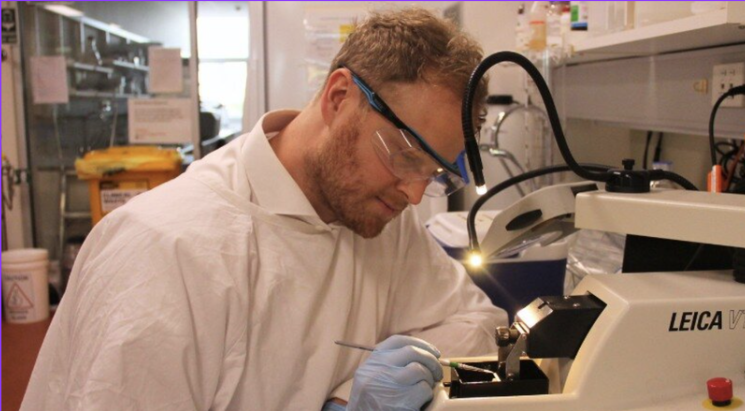
Developing pharmacological therapy for methamphetamine addiction
In short: Researchers at the University of Sydney are working with biotech company Xylo Bio to develop a pharmacological treatment for methamphetamine addiction. Australia leads the world in harms associated with methamphetamines. Yet, unlike many other addictions, there are no approved drug therapies.
What’s next: With the support of the National Industry PhD Program, a University of Sydney PhD researcher is working with Xylo Bio to develop a drug to help people suffering from meth addiction – and potentially also mental health issues.
Australia leading the world
Australia is leading the world – and not in way we should be proud of.
The University of Sydney’s Dr Nicholas Everett has built his career around methamphetamine addiction. He says most people are shocked to learn that Australia leads the world in terms of harms associated with methamphetamine addiction. “It’s a huge problem in Australia and it’s increasingly a regional problem as well,” he said. And unlike other addictions including alcohol, nicotine or opiate use, there are no approved pharmaceuticals available.
It’s bad in Australia, but the problem is also growing globally. “Being a synthetic drug, methamphetamine can be manufactured anywhere in the world, which sets it apart from drugs like heroin, which has a supply chain that is understood and can be controlled,” said Dr Everett. “There’s a global opioid crisis. It started in America, and it has spread across the world – and now it’s rapidly becoming a methamphetamine crisis. People are on heroin or something every day of their life. But the thing that gets them to seek critical help is the methamphetamine addiction.”
The problem with seeking help is that methamphetamine – along with cocaine – is one of 2 stimulants where there is no pharmacological treatment.
Working with industry on a nearly impossible goal
University of Sydney researchers want to understand why there are limited options for treating meth addiction. “Is it because we haven’t tried enough things, or we’re trying the wrong things?” said Dr Everett.
“It’s an exciting area to be in because it’s nearly impossible to do what we want to do. We want to try and treat something that is currently untreatable, which is intimidating. And we could spend our entire career and never achieve that goal. In some ways, it feels like we are setting ourselves up for failure. But you know that means you must be creative and constantly push things and think about things different, which is science.”
In collaboration with Sydney startup Xylo Bio, which is pioneering neurotherapeutics designed to rewire neural circuits and restore brain function, the researchers are exploring ways to develop a drug for meth addiction around a unique and interesting target in the brain – based on the mechanisms that psychedelics act on. The team is not researching psychedelics themselves but instead researching drugs that target similar mechanism in the brain, focusing on a few compounds for further research.
“Xylo is an amazing partner because they have incredible medicinal chemists who have made thousands of novel drugs. And from there they have drilled down to a couple that show incredible promise in other disease models,” said Dr Everett.
Melding academic neuroscience and industry drug development
Alex Athanasopoulos is a PhD student under the supervision of Dr Everett at the University of Sydney. He is also working with pharmaceutical company Xylo Bio under the National Industry PhD (NIPhD) Program.
Athanasopoulos took up scienceto help people. He originally studied psychology because he was interested in human behaviour, but while studying pharmacology on the side. “I was learning about drugs, and I happened to meet Nick (Dr Everett) in Honours, and we did our Honours project. I got to learn about addiction and how widespread the social and economic burden is, and how little people are investing in it,” he said.
Having recently commenced working with Xylo, Athanasopoulos will go back and forth between Xylo Bio and the University of Sydney to research how targeting these different receptor systems in the brain might improve symptoms of meth addiction that could help people abstain or stop relapsing.
Dr Everett has been a big advocate for Athanasopoulos’ PhD focus – and industry placement with Xylo Bio.
“What this area needs is curiosity-driven creative research so we’re not doing the same things we did for 50 years – because that hasn’t worked,” he said. “You see a lot of students like Alex come through and go, wow, I can’t believe there’s no solution here yet. You could be the person that changes this aspect of humanity, which is quite incredible.” “By the end of Alex’s PhD, he’s going to have unique expertise in academic neuroscience and the additional work we do, and also the industry drug development work. There are only a handful of people in Australia who can walk between those two fields,” he said.
Alongside Dr Everett as a supervisor, Athanasopoulos has 2 other supervisors who are affiliated. For instance, Dr Maria de Fuente is a preclinical researcher and who will help with the experimental models and designing the experiments. And he will work with Dr John Brett at UNSW, who was a clinical researcher in methamphetamine addiction and is currently running psychedelic methamphetamine clinical trials.
“The NIPhD Program has given me the opportunity to meet all these wonderful people and gain a lot of insight that I just didn’t think was possible in a PhD. I now have preclinical experience, which is a field I want to continue working in. But also, this newfound clinical understanding, which is important as a preclinical researcher because at the end of the day we’re making drugs to help people. Having access to all this knowledge is amazing and it wouldn’t have been possible without the Program,” said Athanasopoulos.
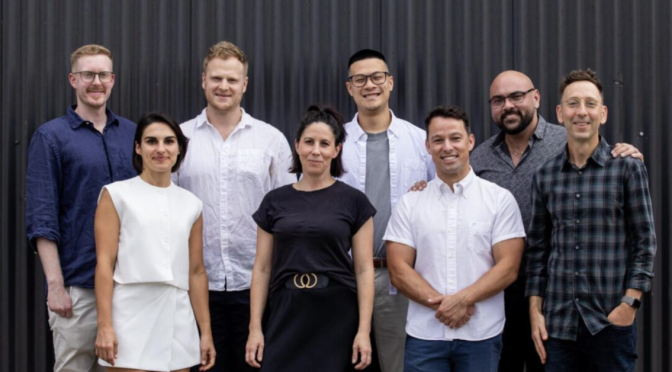
The National Industry PhD Program sounds almost too good to be true
Dr Everett said the NIPhD Program was an ideal fit for the research and industry model that was needed to develop pharmaceuticals for meth addiction.
“A lot of the preclinical research can kind of go off in different directions. And it’s hard to understand how that’s going to help people. Sometimes you need basic science. But for the kind of work I do, I really wanted to find a way to give a student like Alex a clear direction” he said. “The combined industry/academia thing is not normal. It’s normalised in the lab a bit more, but on the grand scale of things that basically doesn’t happen very much.”
“When applying for [the Program] and looking at the guidelines, the thing that stood out first and foremost is that it’s putting the student to the front of it – financially supporting them and making sure they have buy-in from both sides. I think it’s the right sentiment, because bottlenecks to good science are not always resources but about having the right, motivated person who is invested. I’m a very big fan of the way the NIPP presented itself as being about the student,” said Dr Everett.
“In Australia the biotech industry is small, although it’s growing. The job Alex might do one day probably doesn’t exist right now in Australia, but it will in the next few years. In a way it’s hard to know what he’s aiming for, but 3 years from now, Alex will be the best person to do that job.” “Alex is going to be exposed to probably 100 years of collective drug development every fortnight,” said Dr Everett.
Industry partner Xylo Bio is also a strong supporter of the NIPhD Program. “I think it’s a great program,” said Chief Executive Officer Joshua Ismin. “Our affiliations with universities have been really instrumental and we’ve been able to draw talent and bolster the team and bring in academic rigour. I would definitely encourage other companies to look into the program and work closely with their academic collaborators to draw the best people in.”
Navigating the Valley of Death
Industry partner Xylo Bio also appreciates how the NIPhD Program is helping it navigate the valley of death for the project.
“Part of the challenge in getting the discoveries that we’ve made from the bench to the bedside is that translational throughput. This involves working with PhD specialists who have gone through rigorous training to assess preclinically whether the candidates that we discover will be effective once they get into humans. Being able to draw from the PhD candidate pool in a manner that is subsidised by the Government and has that level of assistance is pivotal for us to get through the valley of death period,” said Ismin.
“When getting a company off the ground you’ve got an idea. And it’s easier to gain traction in terms of initial investment and getting the ball rolling. But you quickly enter this period where you are too early for some of the established biotech venture capital funds, but you’re too late for the pre-seed style investors,” he said. “The NIPhD Program helps in getting assistance to navigate though that stage, thereby helping translate biotech research into a commercial application.”
Ismin acknowledges there it is at least 5 to 7 years before the drug could be commercially available. “We have nominated our first candidate for in-person human trials, and we’re hopeful we can initiate those early to mid-next year, he said.
“We’re doing our early R&D and clinical work in Australia. We have bigger ambitions in terms of commercialisation. We would love for our discoveries to translate into global products that are available around the world,” he said.
Dr Everett said NIPhD Program support was crucial because its often hard to raise money to do research into addiction. “Not only because it’s not necessarily profitable to sell drugs to people who might be unemployed, but patients in clinical trials are on many substances, and many of them have chronic health problems making the clinical trials risky to run. And even the clinical trials are very long compared with other psychiatric conditions – so they’re more costly.”
Pioneering drugs for broad applications
Xylo Bio is developing targeted neurotherapeutics to treat neurological and neuropsychiatric disease. Eventually, the drugs from this project may treat a wider range of issues.
“What we’re working on together are drugs that might have efficacy across a broad range of psychiatric disorders, including mood disorders as well. The collaboration is derisking that pipeline by not just going down full addiction, anxiety and depression, but casting a wide net,” said Dr Everett.
“The path is long to get through the translational research, clinical trials and to patients,” said Ismin. “But the implications are quite substantial. When you talk about the prevalence of mental illness and neurological disease, half of the world’s population can expect to develop a mental disorder at some point in their lifetime.”
“Therapies we have right now that we use to address mental illness are generally SSRI antidepressants that take a long time to kick in with a myriad of side effects. We’re hopeful that the neurotherapeutics we’re working on will have a rapid onset and might not require lifetime prescriptions and have far fewer side effects than the standard of care right now,” said Ismin.
“What’s unique about this project is that psychedelics and the pathways they’re targeting have shown promise in other areas of substance abuse such as alcohol and nicotine, but we don’t have much information on methamphetamine,” said Athanasopoulos.
“We have quite a good hypothesis, but the exciting bit about this project is that we are pioneering this. That’s where an industry partner like Xylo Bio, which has amazing preclinical and clinical researchers, can help develop this programme alongside us to determine a pathway that will help us one day get a drug in the clinic,” said Dr Everett.
ANU & AGSCENT Collaborate Identify Diabetes in Cows
ANU & AGSCENT Collaborate Identify Diabetes in Cows
In short, the Australian National University is partnering with regional agricultural startup Agscent to develop a hand-held device using nanowire semiconductor technology to identify diabetes in cows.
- The National Industry PhD Program (NIPP) has enabled the project to pivot to an agricultural application.
- What’s next: ANU and Agscent are working on a licensing agreement that will facilitate commercialisation, and a PhD student will begin this year.
semiconductors
When we think of semiconductors, we rarely think about medical applications. However, a ground-breaking Australian National University (ANU) project, working in collaboration with regional startup Agscent, is using semiconductor nanowires to help identify diabetes in animals – from their breath. The project came out of ANU’s 2017 Grand Challenge program, Our Health in Our Hands, which aims for more precise diagnosis and personalised intervention for people affected by chronic disease, particularly diabetes and multiple sclerosis. The nanowire project uses semiconductors to perform a breath test for diabetes to reduce the number of blood tests for diabetics.
‘It’s a multidisciplinary program involving physicists like us working with engineers and health specialists to develop the sensor, understand the patients’ problem and codesign the projects,’ said Professor Lan Fu.
This project uses semiconductor technology to develop nanoscale sensors. Up until now, her group has worked with semiconductors optoelectronic devices such as lasers, photodetectors and LEDs. ‘We’ve got a lot of knowledge in that area, but we have never worked with sensors before,’ she said. ‘We know that the semiconductor nanostructures are ideal material for sensors, and the because of the diabetes project we took the opportunity to start working in this field.’
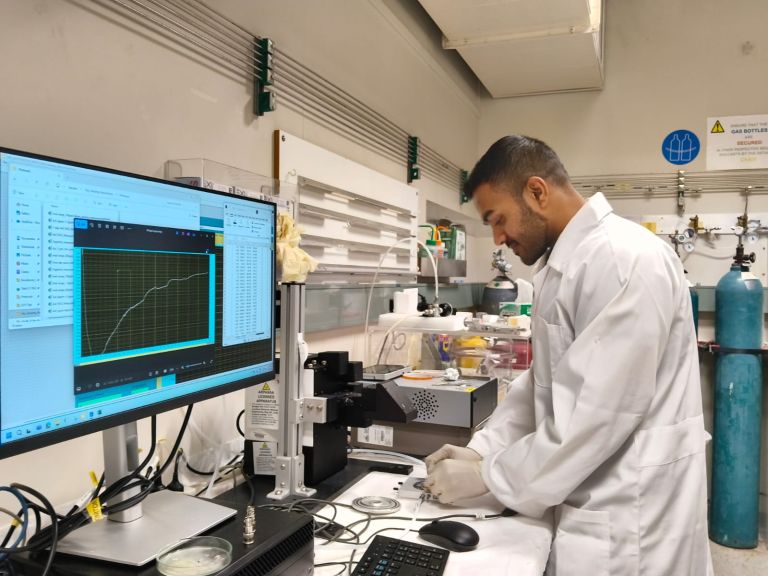
Based on her previous nanowire research, Professor Fu’s team has designed a novel nano sensor that is a group of nanowires with a contact on the end of each nanowire that can measure the resistivity change when it interacts with gas molecules. The structure has been designed to be highly sensitive to acetone, a well-known biomarker for diabetes present in human breath.
Innovation in health diagnostics for animals
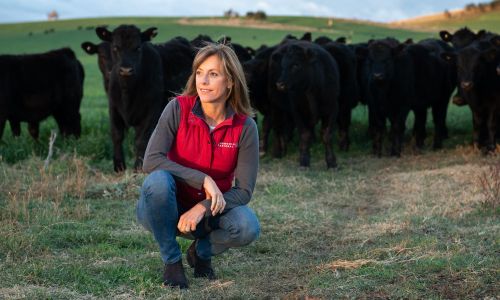
But now the project is going in a new direction, focusing on animals, following the introduction of an industry partner, Agscent Pty Ltd. Breath acetone could also be a biomarker for animal diabetes or ketosis. Agscent is a New South Wales regional startup that is developing an innovative, non-invasive diagnostic sensing technology for farm animals. Founded by Dr Bronwyn Darlington, Agscent uses hand-held devices to determine early-stage pregnancy from a cow’s breath using nanospace technology licensed from NASA and Macquarie University.
Agscent’s focus on using the breath of animals is innovative. ‘We are certainly very early as far as being pioneering in this space,’ said Dr Darlington. ‘I started developing breath-sensing technology before COVID, which was a thing when everyone thought I was just crazy. Now I’m no longer a crazy woman.’
Agscent wants to expand its technology to include a test for diabetes in collaboration with ANU.
‘The risk to animals is that often you don’t know they have diabetes until the animal is so sick it will die,’ said Dr Darlington. ‘We already have technology that collects the breath of cows in a remote field. Understanding their acetone levels can be a predictor of bloat or heat stress. Ideally, we want to test out those two specific environments where there is a very specific value add.’
Fewer needles and earlier identification
The project that ANU and Agscent are working on could ultimately mean less need for invasive diabetes testing.
‘Everyone knows that when people have diabetes, you have to do a lot of blood fingerprint testing,’ said Professor Fu. ‘It’s inconvenient, and you have to do it several times a day. And for animals, it causes discomfort and stress.’
The highly sensitive sensors being developed by ANU can measure the acetone concentration – even to an extremely low level of a few parts per billion, outperforming many other types of cetone sensor making it potentially critical for animal applications.
Fewer needles and earlier identification
The project that ANU and Agscent are working on could ultimately mean less need for invasive diabetes testing.
‘Everyone knows that when people have diabetes, you have to do a lot of blood fingerprint testing,’ said Professor Fu. ‘It’s inconvenient, and you have to do it several times a day. And for animals, it causes discomfort and stress.’
The highly sensitive sensors being developed by ANU can measure the acetone concentration – even to an extremely low level of a few parts per billion, outperforming many other types of cetone sensor making it potentially critical for animal applications.
The National Industry PhD Program
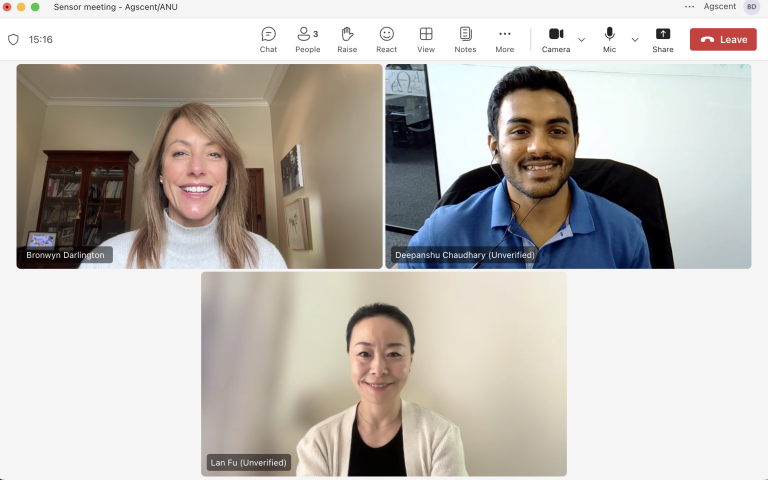
Professor Fu had heard about the NIPP but had never applied until now. ‘Dr Darlington contacted us, and we had a good chat. Then, we felt we could really collaborate on this project. So that’s how we got into the program,’ said Professor Fu.
‘I think it’s totally the right program to facilitate industrial collaboration. It’s a great opportunity because everything is formalised, and they have a very good plan. When we were writing the proposal, it gave us an opportunity to really sit down and come up with a detailed plan. It’s important for us to substantiate this type of collaboration.’
Professor Fu said the collaboration would result in research that could raise the technology readiness level of ANU’s nano sensor technology. ‘It will also deepen our relationship with industry and help us understand our capabilities with each other, as well as provide access to new facilities and platforms,’ she said.
Professor Fu believes the NIPP also provides an excellent platform for training of HDR students. ‘One of the things I am impressed by the NIPP is that it is about a cohort of students. They’re not only going to undertake research in our labs and with our industry partner, but the students will be part of a cohort undertaking organised activities together to develop their industry skills. Those skills – and experiences – are quite important for their future career. It’s not like a conventional PhD. In addition to academic skills, you will have a whole set of new skills and more opportunities for the future.’
This project is not the first time Agscent has worked with the NIPP. It already has a project involving a PhD student at Macquarie University, which is now in its second year. ‘We have had a very good experience with that,’ said Dr Darlington. ‘I’m very keen, proactive, and passionate about ensuring we have strong connections between industry and academia and supporting PhD students in developing abilities to work with industry,’ said Dr Darlington. ‘And that means we’re often pushing them to work faster than they are used to. ‘
‘It is also important to partner with universities to help develop the skillset so we can go forward with this new work of nano-sensing technologies,’ said Dr Darlington.
Commercialisation
At the time of writing, Agscent was finalising the licensing of ANU’s technology. However Agscent believes the project will provide important information about the application potential – including the potential for commercialisation.
Having a PhD student allows Agscent to push a commercial outcome into the PhD’s journey rather than just a scientific outcome. ‘It allows us to provide insights into the other technical and scientific aspects of what they are doing that they would not normally get,’ said Dr Darlington. ‘We have a laboratory with excellent gas chromatology and mass spectrometry equipment that can look at the biology. ‘
‘It is one thing to be able to say it can record acetone. However, in a cow or a dog, the concentration levels are set at certain percentage limits. I can work with the PhD student to refine the accuracy of something within a very usable parameter by engaging this early. I see it as a big advantage for us.’
QUT & Seeing Machines collaborate to reduce road fatalities
QUT & Seeing Machine Collaborate to Reduce Road Fatalities
In short, QUT researchers and Seeing Machines are finding innovative ways to enhance human-machine interaction – and potentially save lives on the road
- Seeing Machines is a global leader in driver monitoring system (DMS) technology, and with assistance from the National Industry PhD program, is working with 3 PhD students across psychology, human factors and computer science.
- Next steps: Seeing Machines hopes that within 2 years its technology can become the new safety standard – just like airbags and seatbelts.
The news is often full of tragic stories about vehicle accidents that ended the lives of people too soon. But the good news is that one Australian company, Seeing Machines, is working with a team of researchers at QUT to make driving safer. Their ambition is to achieve Vision Zero – a society in which there are zero fatalities from road accidents. If this seems like something out of science fiction, you may be surprised to know that Seeing Machines has been deploying innovative technology to help reduce vehicle accidents for over a decade, particularly in the mining and trucking industries.
Now, under the leadership of QUT’s Professor Ronald Schroeter, 3 PhD students are combining their specialties in psychology, AI and computer systems to find innovative ways to improve vehicle safety. The industry research program, supported by the National Industry PhD Program (NIPP), enables students to complete a PhD while ensuring their research has real-world applications that will save lives.
A vision to raise vehicle safety standards
Seeing Machines, based just 5km away from Australian Parliament House in Canberra, is a global leader in driver monitoring system (DMS) technology that is actively developing AI-based solutions to improve transport safety. Seeing Machines has been working in cooperation with Professor Schroeter, a Principal Research Fellow at the Centre for Accident Research and Road Safety at QUT, since 2016.
Professor Schroeter suggested QUT and Seeing Machines partner under the NIPP given their history of collaboration. “When Professor Schroeter came to us with this opportunity, it just seemed like a perfect fit in terms of what we were looking for in the next stage of our collaboration,” said Kuo. With the support of the NIPP, the relationship between the two organisations has solidified and grown, enabling them to have a broader cross-disciplinary focus.
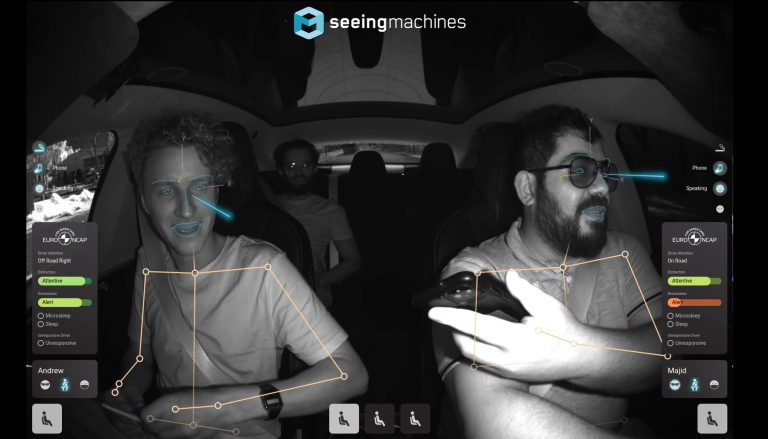
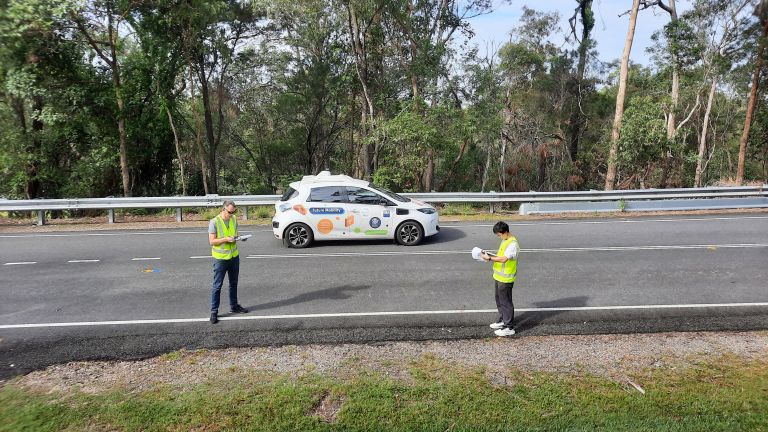
Seeing Machines isn’t producing driverless cars. But its technology is a crucial intermediate step towards that aim. The core technology is a camera-based DMS that monitors head and eye movements to detect signs of driver impairment or distraction. The technology has been used extensively in the mining and trucking sectors for around a decade. Now, there’s a strong regulatory push to install the DMS in passenger vehicles, where it’s being used to support other safety systems, such as hands-free assisted driving and autonomous braking features. “Within the next two years, we expect to see this kind of technology become the next new safety standard—like seatbelts or airbags,” said Kuo
Kuo’s comments aren’t just wishful thinking: Seeing Machines works closely with safety regulators in Europe, North America and Australia. Seeing Machines has previously provided advice to the European New Car Assessment Program based on previous research, in effect advocating for more stringent safety requirements on vehicle manufacturers. And Seeing Machines values research that helps it advocate for better vehicle safety.
“As these technologies become more commonplace, there is an urgent need for high-quality peer-reviewed research informing how these technologies can be assessed and regulated. Longer term, it’s the ability to leverage data and insights from programs like the NIPP that will drive real world change.”

Meet the students
Each of the 3 PhD students studying at QUT and working with Seeing Machines brings a unique disciplinary background—from human factors and psychology to computer science and vision science. Yet all share a unifying goal: making roads safer through smarter, human-centered technologies.
1. Yueteng (Laurence) Yu: subtle interfaces for safer self-driving cars
With a background in human-computer interaction, Yueteng Yu is investigating how adaptive vehicle interfaces can help drivers remain alert and engaged in semi-autonomous settings. His research proposes novel approaches, such as using subtle vehicle dynamics—like gentle braking or deceleration—as subconscious nudges to regain driver attention.
“In traditional vehicles, warnings are visual or auditory. But in a self-driving car, people might be watching a movie, talking or relaxing. I’m exploring how the car itself—through subtle movement—can guide the driver’s attention without disrupting their experience,” says Yueteng Yu.
Working with Seeing Machines allows him to test ideas on cutting-edge self-driving car test tracks and receive regular feedback from experts in human factors and engineering. His research could significantly improve safety and user experience, particularly in rural areas where disengagement poses higher risks.
2. Thanh Huy Phan (Huy): understanding impairment through AI and eye movement
Huy, a data science PhD student, is developing data-driven methods to detect subtle or previously unknown causes of driver impairment. His work utilises advanced AI to analyse eye movement patterns, taking into account contextual elements such as illness or environmental conditions.
“Imagine you’re sneezing from a cold and lose focus for just a moment. That split-second lapse can be dangerous,” explains Huy. “Our AI models can incorporate these factors to explain changes in driving behaviour—something traditional models often miss.”
A significant advantage of working with Seeing Machines is that it gives Huy access to billions of hours worth of driving data. This offers Huy a unique opportunity to train AI models that could be applied commercially, maybe even within the next few years.
3. Tina Mehraban: teaching cars to think like experienced drivers
Tina is researching how to make self-driving cars more human-aware. Her project analyses how experienced drivers allocate attention, aiming to teach automated systems to notice and prioritise the same cues.
“I’ve always been fascinated by how people and technology can work better together,” she says. “This isn’t just about building smart systems, but about building systems that understand people and support them.”
Her interdisciplinary research combines AI with insights into human behaviour to improve road safety. By understanding when inexperienced drivers miss important visual cues, Tina’s work could inform the development of better training tools and smarter alert systems—offering benefits far beyond the automotive industry.
The industry-academia advantage
As the industry partner, Seeing Machines believes a key advantage of the NIPP is that it enables it to work with quality researchers. “It’s about tapping into the best and brightest that Australia has to offer,” says Kuo. “The students are exploring questions that may be outside our immediate business needs but are incredibly valuable to our long-term R&D.”
The students, in turn, gain hands-on experience working with an industry leader and access to state-of-the-art technologies and real-world driving scenarios not typically available in academic settings. According to Yueteng Yu, “Being embedded in industry helps me test ideas in practical settings and refine my methodology based on feedback. It bridges the gap between theory and application.”
Tina Mehraban said doing her PhD through the industry-collaboration model of the NIPP is helping give her a ‘real world’ lens.
“Doing a PhD in industry helps you stay connected to real world problems. You learn how to make your research more practical and useful, not just theoretical. It also gives you a chance to work with people from different backgrounds, build valuable networks and see how your work can be applied in the real world, which is something you don’t always get in a purely academic setting,” she said.
Professor Schroeter’s career is centred on designing innovative driving experiences that make transportation more enjoyable – and safer. He believes the economic and social significance of the research collaboration is significant.
“The broader goal is to accelerate the safe introduction of automated vehicles. This could reduce the $30 billion annual cost of road trauma in Australia and improve transport efficiency. For a country without its own car manufacturing industry or a domestic tech giant, collaborations like this are essential.”
Seeing Machines also hopes the collaboration will lead to commercial outcomes. “Where any new discoveries prove to be commercially viable, we would look to license that and incorporate it into our core technology offering,” said Kuo, adding that Seeing Machines is also exploring the option of jointly developing a patent portfolio that could be used to both protect new intellectual property and allow students to continue to publish their findings. “If we find something commercially viable—like a new method to predict impairment—we can patent it while still allowing students to publish. It’s a win-win,” he said.
Developing future-ready researchers
The NIPP is not just focused on academic research. It also focuses on professional development of the PhD students. Regular workshops hosted by the Department of Education offer training in commercialisation, collaboration, and networking—preparing students for diverse career paths.
“The training on working with industry partners was really helpful,” said Yueteng Yu. “It’s not something you usually get in a traditional PhD.”
Scholarship top-ups also provide relief from cost-of-living pressures and help students focus on high-impact research. More importantly, the program shows students how their work can make a difference outside the university. “Not all PhD graduates want to go into academia,” notes Professor Schroeter. “This gives them real insight into industry and alternative career options.”
More than a transactional relationship
Contemplating what makes for a good NIPP project, Jonny Kuo says that successful industry–academia partnerships require more than transactional arrangements. “Some researchers see us as just a tech provider, or themselves as researchers-for-hire. But the most fruitful collaborations are the ones built on shared goals and mutual respect.”
That sentiment resonates with Tina Mehraban, who values the program’s alignment of personal passion and practical impact: “I don’t want to be disconnected from the real world. I want my research to be useful, to be applied, to make a difference.”
SPEE3D & Charles Darwin University collaborate on cutting edge 3D metals
SPEE3d and Charles Darwin University
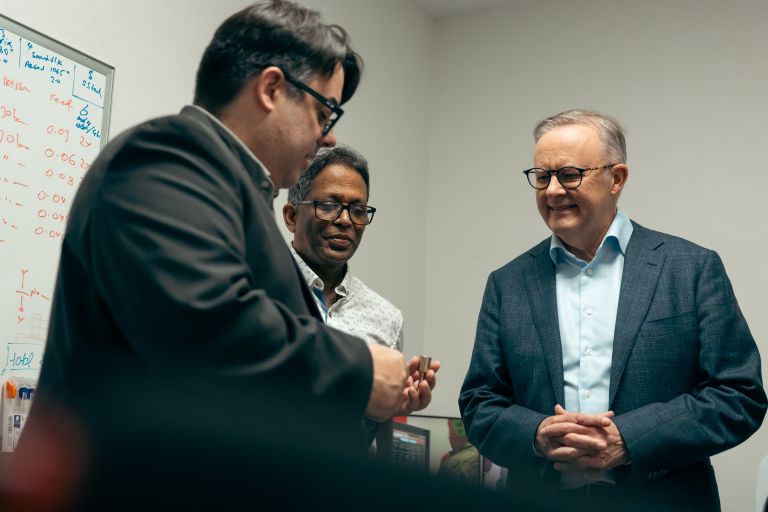
Co-founder and Chief Technology Officer at SPEE3D thought the National Industry PhD Program (NIPP) was such a good idea that he enrolled in a PhD to join the program. He balances a busy role at a growing company with the academic discipline of completing a PhD, while finding ways not just to innovate in science but in the way he studies his PhD.
Innovating 3D technology – by chance
Steven Camilleri, along with cofounder Byron Kennedy, started metal 3D printing technology company Speed3D 10 years ago. While a lot of 3D printing had focused on softer materials such as plastics, Camilleri and Kennedy saw a need for developing a deployable 3D metal printing technology.
‘It’s fun tech – it’s a fun field to be in,’ said Camilleri of his focus. ‘Being metals they are much more industrially focused than other parts of the 3D printing industry. So the stuff needs to work and be able to do its job.’
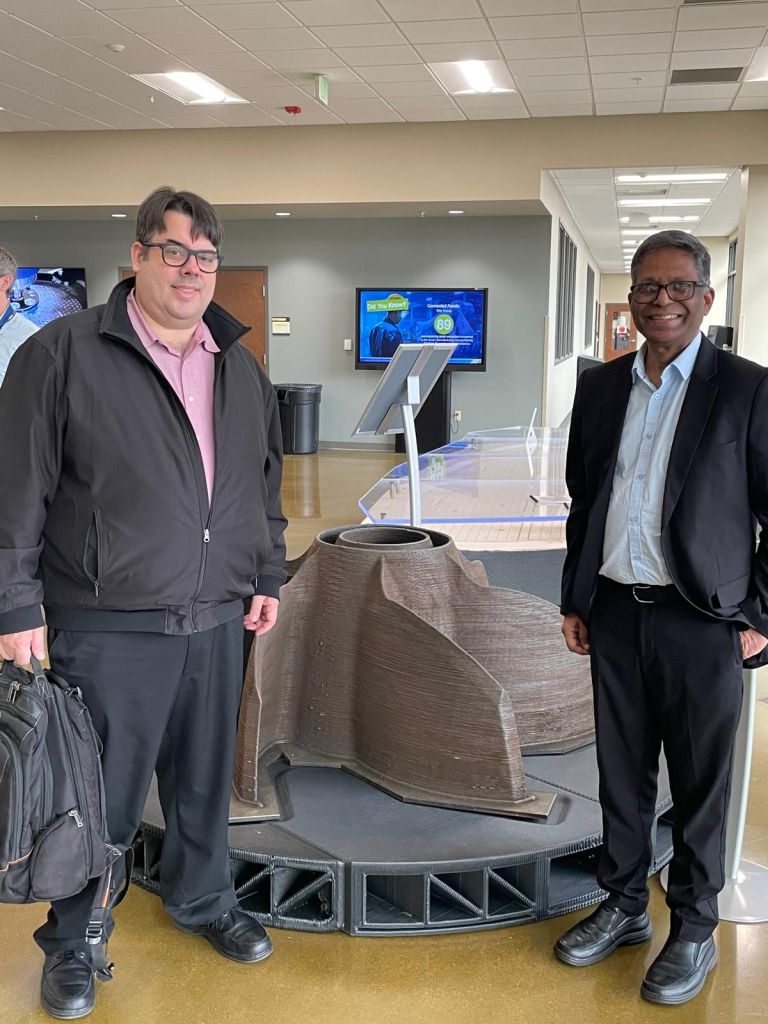
SPEE3D’s systems are around the size of a light truck, making them easy to deploy to where they are needed such as for defence applications. The company has several systems in commercial use, including 10 systems on the front line of Ukraine.
SPEE3D was founded almost by accident. While working and studying at Charles Darwin University (CDU) in the early 2000s, the pair became involved in the World Solar Car Challenge, which led to them developing a type of electric motor. ‘I can pretty much build an EV from scratch,’ said Camilleri of his electrical engineering background. They then formed In Motion Technologies, a CDU spinout company to further the motor design. The company was then acquired by Regal Beloit Corporation.
The pair continued to work for Regal Beloit, with Camilleri serving as R&D Manager. Regal Beloit asked both cofounders to learn more about manufacturing to help solve problems their manufacturing team was working on. Camilleri and Kennedy spent several years learning about manufacturing, completing GE manufacturing and training as well as design for six sigma (?).
After a few years of working for Regal Deloitte, Camilleri and Kennedy encountered a problem: metal parts were hard to get. ‘As people who are curious, we thought maybe there’s a technology solution here. 3D printing was just starting to become more common, but nobody wanted to work with us on the idea of developing and manufacturing a version of 3D printing technology for metal,’ said Camilleri.
That led to the cofounders quitting their jobs and starting SPEE3D.
Ideal collaboration for the National Industry PhD Program
Professor Kannoorpatti Krishnan is a research professor for advanced manufacturing at Charles Darwin University. Professor Kannoorpatti’s team has been collaborating with SPEE3D for around 5 years in the materials scientist and metallurgist areas. When Professor Kannoorpatti heard about the NIPP, he was excited.
‘This is a great scheme to attract people from industry to work with the university,’ said Professor Kannoorpatti. ‘It’s a unique scheme for Australia and people from the US were actually surprised that it is happening here. I’m grateful the Government has come up with this scheme and is also incentivizing people who are already doing research to get recognition from the academic community.’
Professor Kannoorpatti felt the NIPP would be ideal for SPEED3D. ‘I thought it was a great opportunity because of the kind of research that Steven and his colleagues were doing, and I said, this is really worthy of a PhD,’ he said. ‘It was pretty easy as the research they do every day is actually of PhD quality.’
Camillieri was immediately onboard with the idea of an NIPP project. ‘I thought it was a brilliant idea,’ said Camillieri. ‘It’s compelling in structure and getting people who are doing research anyway to think about getting it blessed by the academic community.’
Camillieri was so supportive of the program that he decided to sign up to do a PhD himself. ‘I wanted to demonstrate to the rest of the organisation that this was something I was happy to support,’ he said. ‘So what better way to do it than to sign up myself.’

Turning work into a PhD
Camilleri’s academic background was originally as an electronics engineer, and he has a Master’s degree in power electronics. But for the past 10 years, he has been working – and innovating – in the field of industrial manufacturing.
‘Materials science is about experiment, test and evaluation, hypothesis and data collection – even when you are doing relatively normal stuff. I’d always found that attractive as a field and I was watching Professor Kannoorpatti and what he does and thought it was pretty cool. I thought that seems like the obvious topic for me.’
‘Most of the people I work with in the industry already assume I have a material science PhD or postgraduate qualifications. I’ve never said I have those qualifications, but people assume I do because of the way I speak about things. We are doing a lot of the type of work that would get you a PhD normally anyway.’
‘You’ve got these systems in material science that are incredibly complex, that you couldn’t possibly hope to model or understand completely with simple methodologies. And you need to learn large body of knowledge to navigate that space successfully.’
Cofounder and PhD student
And what about being both a cofounder of the industry partner and a PhD student?
While Camilleri has managed, co-supervised and co-sponsored PhDs, until now he hasn’t been one himself. ‘It’s very novel from my point of view, and very novel from the university’s point of view as well,’ he said. Professor Kannoorpatti says the collaboration is working well. ‘Luckily, I have a very friendly team to work with in SPEE3D. The guys have experience in a university, and they know exactly how CDU works, and we get to meet them regularly,’ he said.
Having a cofounder who already had a strong background in the subject matter also meant the research collaboration was not starting from first base. ‘Normally if you have a student coming to do a PhD you have to tell them a lot of things and do quite a bit of training. But we didn’t have to train Steve at all,’ said Professor Kannoorpatti.
A team-based approach
Camillieri said he is approaching his PhD is slightly different than the standard way of doing things – especially as he is working on research as part of a team.
‘It’s hard to keep students motivated and for them to get the results they need. Working on your own on a project that will take years, the type of people who that will really appeal to is not actually a large percentage of society. Actually, most people like working in teams. They like having many goals that shift over time.’
‘In contrast, doing a PhD generally involves going down a rabbit hole and living in that rabbit hole for several years. You don’t come up for light until the end. So, it’s a little at odds with what industry wants, at least in my industry. I really like people who can work well in teams. I like people who can break a problem down and then execute pieces of the problem – and then change direction rapidly if the methodology of hypothesis was wrong. And I think that’s probably not that unusual to want those things in an industrial setting, but the PhD teaches you to laser focus on one thing for years.’
‘Fortunately, we’re doing this anyway in the context of a team. The idea that I’m part of a team is something that doesn’t happen with most PhDs. And that does surprise people at CDU: it’s not just me generating results and writing things up, because it’s a team.’
And while Camilleri, as a cofounder and CTO, has people in his company who can work with him to support his PhD, he stresses this is just how things are normally done in teams. ‘If any of the people working for me or with me were working on PhDs – and indeed some of them are – they get the support of the rest of the team just the same. You don’t say “one research problem per person, come back in 3 years”.
‘We don’t have any problems with motivation getting the research done, as we have very serious commercial goals arounds the research. It’s all mapped out and I’ve got people leaning on me to get things done.’
The research is on rails
The specific project for the collaboration is titled methods for the robust employment of metal additive manufacturing in high-risk industrial applications. Professor Kannoorpatti said the industry/research collaboration was already delivering results and solving industrial problems.
Camillieri agrees, categorising the research results from his work at SPEE3D and collaboration with CDU as solid. ‘The good news is the research is on rails. There’s no issues with that. It’s going to happen, and it’s going to be a high standard,’ he said.
But in a fast-paced industrial environment, sharing the results to the academic community can be a challenge. ‘We’re going to struggle to keep up with the reporting because what is happening is so far ahead of what’s expected by the university,’ said Camillieri.
‘The additional thinking that the PhD is forcing me to do, being more rigorous and the academic instruction, I’m finding very beneficial to the company as well. One of the reasons I am so supportive, is because it is yielding a benefit way beyond a PhD. The PhD is not the end game. We have a feeling that some things are underserved in terms of potential and this is an opportunity to go away and look at it with a larger lens. That’s the real appeal for me.’
Camillieri cites the time needed to complete a PhD as the biggest obstacle for him. He is navigating this by publishing papers regularly. ‘It is almost worth standardizing completing industrialized PhDs this way,’ he said.
‘We are recognizing the work that SPEE3D is already doing and the main thing is to get the work processed in an academic way – and we want to do that by publication so that it’s not a huge burden on Steve as we can break it into chunks and keep publishing,’ said Professor Kannoorpatti.
Biodiversity company Thesium and Macquarie University researching endangered microbats

Thesium & Macquare University
When assessors discovered microbats on a property they manage, Greg Steenbeeke, Principal Ecologist and cofounder of Thesium Pty Ltd, knew it was an important find. A consultancy specialising in sustainability and biodiversity offsets, Thesium works with landowners to ensure compliance with NSW's Biodiversity Offset Scheme.
The large-eared pied bat is an insect-eating, migratory microbat listed as endangered. Until now little was known about the breeding habitat of these small, furry mammals.
Following his microbat discovery, Steenbeeke contacted microbat expert Lachlan McRae who had just commenced his PhD at Macquarie University researching the large-eared pied bat.
Collaborating through the National Industry Phd Program, Thesium offered McRae the opportunity to study the pied bats’ breeding habitats. Thesium provides McRae with mentoring, equipment, use of a 4WD, significant financial support and access to seven unique, private land conservation sites in New South Wales.
McRae has since discovered more large-eared pied bats, with the bats identified on five of Thesium’s sites. McRae’s research has also expanded to cover the eastern cave bat examining how both bats coexist.
McRae’s research has already had a positive commercial impact on Thesium’s business. As an on-site expert, McRae helps identify bat species, supporting Thesium’s clients to demonstrate compliance with NSW government regulations.
‘It can be quite difficult…there aren’t many experts in the field, and now almost every development needs to take biodiversity impacts into account,’ said Steenbeeke. McRaes work has further contributed to Thesium generating biodiversity offset credits, which it can sell to developers or others wishing to buy credits.
McRae says the National Industry PhD Program has been ‘critical’ to the success of his research. McRae also values Steenbeeke’s wisdom and guidance. ‘He’s been able to mentor and provide really good insights into how it all works, which has been really helpful – especially in understanding how the offsets part of the business works.’
Although in its early stages, McRae’s research is also furthering our scientific knowledge about bats: he discovered that eastern bats have what appears to be networks of roosts rather than distinct colonies as well as the ability to roost in artificial structures. The large-eared pied bats can move roosts regularly, even maternity roosts with pups. This information is crucial to understanding microbat breeding habitats, preserving biodiversity and preventing the extinction of these tiny but important creatures.
A vaccine to prevent middle ear infections
GPN Vaccines & University of Adelaide
Middle ear infections could be a thing of the past, thanks to research collaboration between GPN Vaccines and the University of Adelaide, supported by the National Industry PhD Program
Many parents are familiar with their children being almost constantly sick with colds and flu, many of which also have ear infections. But the true health, social, developmental and economic costs are greater than you might think.
The cost of middle ear infections
Middle ear infections (otitis media) are common, with 80% of children experiencing an ear infection by the age of 3. Around 4 out of 5 children experience a middle ear infection at least once and many children suffer repeat ear infections, with parents needing to resort to costly and invasive surgical procedures.
The cost of treating middle ear infections in developed countries such as Australia and the United States is more than $1 and $2 billion per year. But the true economic cost is far greater, with Professor Tim Hirst, Chairman and CEO of GPN Vaccines estimating otitis media costs the US economy more than 10 times as much each year when the impact of parents needing to stay home to look after their children is factored in.
According to Dr Erin Brazel from the University of Adelaide, middle ear infections can be chronic and result in long-term complications including hearing loss. ‘This can lead to developmental delays, learning difficulties and social skills in children. So, this is a far-reaching problem that needs to be addressed.’
And while non-typeable Haemophilus influenzae bacteria are largely involved in ear infections in kids, these bacteria also affect adults and can lead to unpleasant lung infections.
The otitis media problem is a global problem, but there is one segment of Australia’s population that is especially vulnerable: Indigenous Australians. First Nations children have the worst ear health of any people in the world, with prevalence rates that are 10 times that of non-Indigenous children. ‘A lot of Aboriginal children in school are probably not hearing what the teacher has to say because their ears are completely full of pus and bacteria and they simply can’t hear,’ said Professor Hirst.
The need to find a way to prevent middle ear infections is personal for Professor Hirst. ‘Our eldest daughter had so many ear infections that she actually had surgical procedures. She had grommets inserted, which allowed the ear to drain more readily. And overnight, she experienced 18 months without an ear infection,’ he said.
‘But then if you look at the cost of that surgical procedure relative to a vaccination, there’s a huge discrepancy. So, you know it will have a big impact on people’s lives. It would be great to have a vaccine that prevents this from occurring.’
Towards a universal vaccine
There are 3 types of bacteria that are responsible for otitis media, of which the most common is usually Haemophilus influenzae.
GPN Vaccines has a long history of collaboration with the University of Adelaide, working together to develop a universal pneumococcal vaccine (a Streptococcus pneumoniae vaccine). That vaccine is now being developed and evaluated in a clinical trial. Following this success, GPN Vaccines and the University of Adelaide decided to use the same approach to develop other vaccines. ‘We came together to think about which unmet needs could be addressed with a similar type of vaccine,’ said Dr Brazel.
Following that, they settled on using the same technology to develop a vaccine to counter the effects of Haemophilus influenzae. Then one of GPN Vaccines’ research assistants put up her hand up to do a PhD to create a vaccine for non-typeable Haemophilus influenzae.
National Industry PhD Program
University of Adelaide PhD student Carla Gallasch is the first student to be activated under the National Industry PhD Program (NIPP). She commenced on the NIPP in September 2023.
Gallasch worked at GPN Vaccines as a research assistant for 2 years before embarking on a PhD in April 2023. ‘I had in the back of my head that I wanted to do a PhD, but I was waiting for the right moment,’ she said. ‘Then GPN started talking about pipeline opportunities and making vaccines for other bacteria. That’s when I got excited, and thought “I’d be really keen to do something in that”’.
Gallasch has an honours degree in biochemistry. When she applied for the role at GPN, the plan was to spend a few years working in industry to gain experience before possibly going back to do further research in biochemistry. But she found she liked working on vaccines. ‘At undergraduate level, I was more interested in biochemistry, but that switched after I started working at GPN. I found microbiology more interesting – and being around passionate people helped, too.’
Professor Hirst said Gallasch was a talented research assistant. After expressing an interest in doing a PhD, Dr Brazel offered to be her supervisor, and ‘it all came together very nicely.’
Five months into her PhD, Gallasch was awarded a NIPP placement. Applying for the program was one of the first things she did once she embarked on her PhD. She heard about it after the University of Adelaide informed her and her supervisor about the program and suggested their project would be suitable.
‘The first thing I noticed was that you get more money,’ said Gallasch. ‘So, I was like, that’s excellent!’ The Australian Government provides a top-up of $6,000 on top of the research stipend from the University of Adelaide. And then GPN puts a certain amount towards it as well.
PhD supervisor Dr Brazel said the application process was relatively simple. ‘It was much smaller than a lot of the other grant applications I’ve put in, and it was really focused on skills development and key milestones for the project.’
The results are in
Professor Hirst smiled as he talked about Gallasch’s first year assessment presentation. ‘I have to say, it was the best presentation I’ve ever heard. It was absolutely outstanding,’ he said.
‘What we’re really excited by at the moment is that we’ve just got our first data on the vaccine in our preclinical studies,’ said Dr Brazel. ‘Carla’s taken this idea that we put together last year, made the vaccine using gamma radiation and established important parameters to make it safe. And we’ve just got our first data looking at the antibody responses and it’s looking incredibly promising.’
‘I’ve generated my first vaccine strain, which I’ve tested, and we’ve had really encouraging results so far with a strong antibody response,’ said Gallasch. ‘That’s a massive milestone for me. This vaccine could potentially mean the improvement of millions of people’s lives – even possibly saving millions of lives.’
While she still does lab work – including in the same lab as her colleagues at GPN Vaccines – a big change is that as a PhD student she has more control over the direction of the research. ‘In my assistant role I’d be working on things in a team and be given tasks to work on, but not necessarily leading them or the problem-solving part of it. What if I want this answer? How can I propose experiments so that I’m driving the project? I think that’s just a lot more exciting for me.’
PhD research uses AI to revolutionize hip surgery

Enovis (360 Med Care) & Flinders University
As more Australians live longer and want to live active lifestyles, there is a growing demand for orthopedic surgery for things like knee and hip joint replacement. And Enovis (formerly 360 Med Care) is leading in innovative research and development, including using artificial intelligence (AI) to improve patient outcomes.
Alex Shen is a biomedical engineer who specializes in AI and datasets. Originally from China, he came to Australia to complete a Master’s degree at UNSW in Biomedical Engineering before beginning work as a researcher at Enovis. He’s now doing a PhD, while working at Enovis, supported through the National Industry PhD Program (NIPhD).
Using data to improve surgical outcomes
The company that was previously known as 360 Med Care was founded in Australia in 2015. Originally known as 360 Knee Systems, it consists of a group of engineers, researchers, machinists and physiotherapists who work to develop and deliver patient specific solutions and technologies for knee and hip joint replacement patients. It was acquired by global medical company Enovis in 2022.
According to Shen’s work supervisor, Dr Joshua Twiggs, the work at Enovis involves taking concepts around orthopedics and surgical planning for total hips, total knees and total shoulders to where they can investigate or influence patient outcomes. The use of data to record – and improve on – patient outcomes is key to what they do.
Shen’s PhD research is helping meld technology with patient care. ‘We wanted to wrap a surgical planning piece around what we can validate against patients who have already had surgeries,’ said Dr Twiggs. ‘And we want to show that if we account for this or that, and if the surgery is done in a certain way, that those patients have a happier outcome after the surgery. This means less pain and better functional movement. One of the coolest things about this program is that it lines up perfectly with the research model that helps us make surgeries better.’
Investing in further education
The company has a history of encouraging and supporting staff to undertake further education. Dr Twiggs (Shen’s supervisor at Enovis) also has a PhD, which he completed while working for what was then 360 Med Care. He sees strong benefits in the model of studying for a PhD while working – and supports Shen’s studies.
‘I’m a fan of the high-level concept of PhDs done with industry embedding. You’re not researching something in the abstract. There’s something to be said for basic research. But the idea that you are compelled to do specific research work because it has a known and provable outcome improvement, and you’re embedded in a context in which you have to prove that outcome improvement to surgeons as a customer, and then use those tools so there’s automatic checks and balances in the work is useful,’ he said.
‘Technology in our line of work moves quickly. Research affects development, which affects real world outcomes,’ said Dr Twiggs. ‘We find we do the best research – the ‘r’ side of research and development – with a PhD done within an industry placement.’
Shen had been working at Enovis for 5 years when he embarked on his PhD. He had been talking to Dr Twiggs about his interest in doing a PhD for a few years. And Dr Twiggs had been speaking with Professor Mark Taylor at Flinders University about the possibility of starting Shen on a PhD.
‘Alex was someone we wanted to move ahead with a PhD regardless,’ said Dr Twiggs. ‘And we needed to find a way to fund it. It wasn’t immediately clear that this was going to happen. And this program has given us a way to do it. Then the stars sort of lined up in terms of Mark tagging the NIPP as an opportunity,’ said Dr Twiggs.
Combining study and work
Shen sees huge advantages to completing a PhD through the NIPP. ‘This is the best program so far like this, that caters to our idea of doing a PhD and linking up the research and the company/industry side as well.’
‘Biomedical engineers must understand the clinical problems and the patient’s mechanics. It’s a knowledge-based engineering role,’ Shen said of his role. ‘Doing a PhD is not only a good way of progressing your career, but also deepening your understanding of medical problems both clinically and in the industry.’
Doing research based on the day-to-day work he is involved in is also a plus, as his work contributes to some aspects of his academic learning towards his PhD. ‘I have knowledge in the company, I’m involved in the work of the company, and I can contribute because the role I play here in the company is research related. Some of the work tasks contribute to some of the aspects of the PhD on the academic side, in a way that doesn’t often happen for a ‘normal’ university PhD project. For most people, they can’t spend their working time on a degree or to chase new knowledge.’
But one of the biggest advantages is the financial support that comes with the NIPP – especially during a cost-of-living crisis. ‘Starting in a junior role in this company, you could barely support yourself and then if you want to pursue higher education or other training, that’s usually an additional expensive.’
Shortly after the NIPP arrangement was confirmed, Shen shared some other exciting news – he was engaged to be married, proving the benefits of the NIPP program go beyond just pure research.
Industry and academic link
Another way Enovis benefits from the NIPP is through enhanced cooperation with academia, which is providing Enovis with avenues to think about problems in different ways.
‘One aspect is absolutely supporting Alex’s research,’ said Dr Twiggs ‘The other aspect that I think is incredibly valuable is the industry and academic link. Mark Taylor (Shen’s PhD supervisor at Flinders University), Alex and myself sat in a room and spent 4 hours nutting out what the project should be. Mark has a body of knowledge academically around what could be done.’
‘There’s a simulation tool that we could apply some AI to that would take into account a bunch of different analysis that Alex is developing and weigh them up. And it would use a machine learning agent approach, which is basically when it changes things randomly and checks if those changes improve the state it’s going for as referenced across different things that Alex is looking at. These are things that matter to patient outcomes. It’s a conversation between Mark and I that wouldn’t have happened otherwise.’
‘My side is probably more on the specific things that matter to patients and the different analysis we do that would help a real patient. And those are the real things that matter in surgery. And then Mark has a body of knowledge about an algorithmic way we can stitch the knowledge together. And just the very fact that we can support a PhD student to do that is great.’
Part of the furniture
Shen’s PhD research is ongoing, but already it’s improving Enovis’s understanding of how to improve patient outcomes and care. Enovis values Shen’s research, and also values him as an employee. The company is not planning on letting him go anytime soon.
‘Obviously we need to finish Alex’s project and put it into action, but we’ve had a track record of prior PhD industry engagement that have introduced tools into our surgical planning processes that measurably improve patient outcomes,’ said his work supervisor Dr Twiggs. ‘Alex is part of the furniture now. He’s not going anywhere.’